Fake or Fortune?
Journalist Fiona Bruce teams up with art expert Philip Mould to investigate the provenance or attribution of notable artworks.
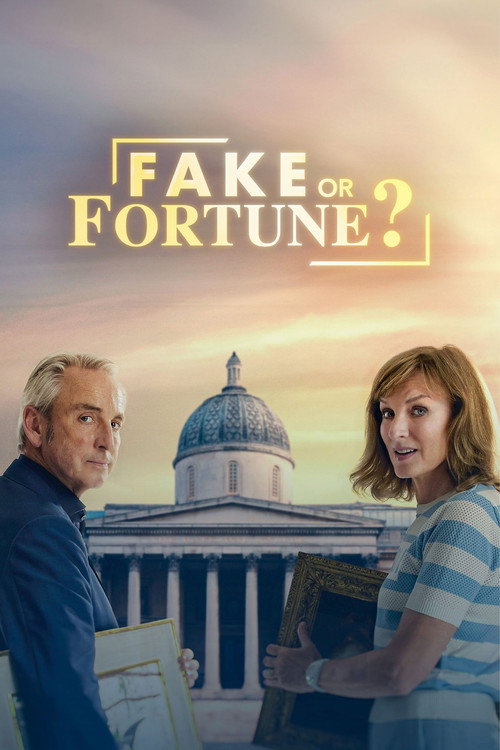
Paintings linked to Sir Thomas Lawrence, Giorgio de Chirico and Venetian view painters are investigated through family histories, labels and documentary evidence. The cases repeatedly show how plausible provenance can conceal misattribution or later invention.
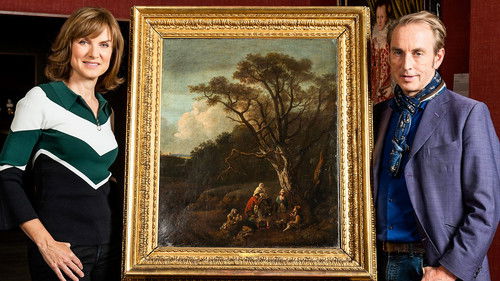
The team examines an eighteenth-century landscape that may be Thomas Gainsborough’s lost painting Wooded Landscape with Gipsies Round a Camp Fire. Old exhibition records, labels and auction numbers appear to support the attribution, while imaging reveals an earlier portrait hidden beneath the landscape. The case also threatens to overturn Philip’s previous identification of another painting as the missing Gainsborough.
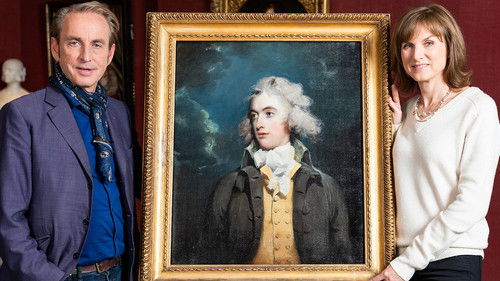
A family portrait traditionally attributed to Maria Cosway catches Philip’s attention as a possible work by Sir Thomas Lawrence. Fiona traces the painting through generations of the sitter’s family, while its unusually well-preserved surface and brushwork are compared with accepted works by both artists. The investigation asks whether a long-established attribution has concealed a major Regency portrait.
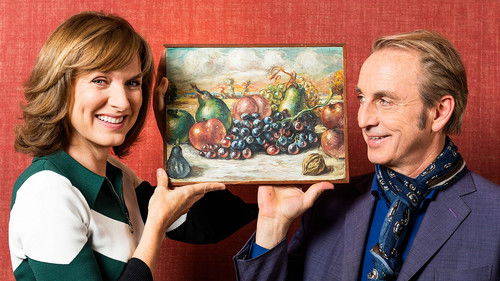
A small still life bought for only £1 is investigated as a possible work by Italian artist Giorgio de Chirico. Scientific testing discovers ingredients associated with the artist’s unusual tempera recipes, and radiocarbon analysis supports an appropriate date for the wooden panel. Despite the promising technical evidence, the team struggles to establish a firm provenance connecting the painting directly to de Chirico.
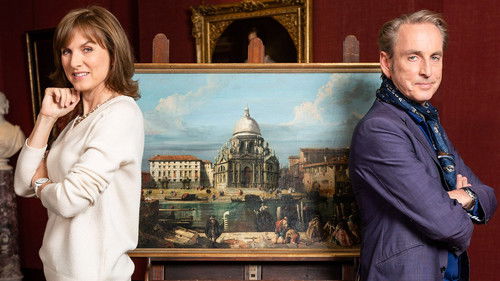
The team investigates an eighteenth-century Venetian scene that has been attributed at different times to Francesco Guardi and Michele Marieschi. Conflicting labels, Royal Academy records and auction documents challenge the family story surrounding the painting, while research in Italy uncovers clues about its early history. The evidence must determine which Venetian master—if either—painted the work.